Friday, 7 May 2010

P7 - Week Beginning 10 May 2010

Reading
Ongoing reading throughout the week, following the plan agreed by each Literature Circle Group or your own literacy plan if you are undertaking a personal book study.

Spelling
Learn Spelling Words for Thursday.

Words this week are based on Theatre vocabulary. These words may be found at:

http://www.spellingcity.com/view-spelling-list.html?listId=3075732

(or you can use the link -

http://www.spellingcity.com/buckstonep7/ and select the Theatre vocabulary - 10 May list).

Oliver Twist - P7 Show
To support the P7 show it is important you know the script and music by heart.

Over the coming weeks this part of the homework will focus on learning your words.

This week you should learn the following- follow the links if you need a new copy of the words.

Food Glorious Food and http://docs.google.com/View?id=ddrgq7kg_54fzd9vzft
Pick a Pocket or Two http://docs.google.com/View?id=ddrgq7kg_55cvxrcjg4

Numeracy & Mathematics

P7 A -


Square Group -

http://www.mathsonline.co.uk/nonmembers/gamesroom/transform/golftrans.html

Use the Golf game to help support your understanding of translation, reflection and rotation. Try and find the smallest number of goes (hits) to complete the 9 hole course.

Circle PLUS Group -

Use the website to work on your skills in using positive and negative numbers: See how quickly you can complete the game. Have another go and try for a Personal Best.

http://pbskids.org/cyberchase/games/negativenumbers/negativenumbers.html


Circle Group -

Check out your understanding of length (m, cm, mm) and weight (kg, g). Select Length/Weight from the menu, then try the 'Input Answers' option. Check that you can get all the questions correct.

http://www.wmnet.org.uk/wmnet/custom/files_uploaded/uploaded_resources/852/measuresv2.swf

Triangle

Can you solve the problem with moving the frogs:

http://www.crickweb.co.uk/assets/resources/flash.php?&file=leapfrog


Rectangle

Check out your understanding of symmetry - try to get maximum points.

http://www.innovationslearning.co.uk/subjects/maths/activities/year3/symmetry/shape_game.asp


P7 B

HEXAGON GROUP

This week we are working on number patterns and sequences. The examples are challenging so take care with your calculations!


TRAPEZIUM GROUP

This week we are consolidating our learning linked to reflecting, rotating and translating shapes

http://www.bbc.co.uk/schools/ks2bitesize/maths/shape_space/transformation/play.shtml

PARALLELOGRAM GROUP

This week we are working on our addition and subtraction skills. The task is challenging, as you are working against the clock!

Thursday, 22 April 2010

P7 - Week Beginning 22 April 2010

Literacy

Reading

Ongoing reading throughout the week, following the plan agreed by each Literature Circle Group or your own literacy plan if you are undertaking a personal book study.

Spelling
Learn Spelling Words for Thursday.

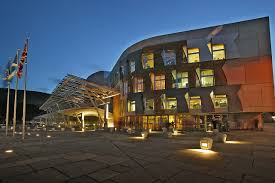
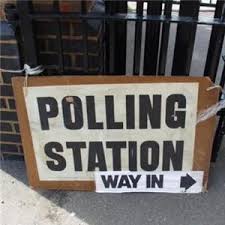
Words this week are based on our Parliament /Election vocabulary. These words may be found at:

http://www.spellingcity.com/view-spelling-list.html?listId=2985332

(or you can use the link -

http://www.spellingcity.com/buckstonep7/ and select the Parliament / Election vocabulary - 22 April list).

Democracy Project Work
To support your understanding of democracy and how it works in the UK, you should select 3 of the homework words and explain their meanings. To support this you should:
  • provide a paragraph detailing information about the word and how it relates to democracy / parliament / elections etc.
  • You might want to include diagrams / pictures to show any relationships between words.
The following links can be used to aid your investigation.

http://www.scottish.parliament.uk/vli/education/resources/teachingResources/wordBank.htm

http://www.scottish.parliament.uk/vli/publicInfo/hspw/documents/HTSPW-Eng.pdf

http://www.parliament.uk/education/online-resources/parliament-explained.htm


P7 A
Square Group - Data manipulation / interpretation

Use activities set up on smart kiddies - http://www.smartkiddies.co.uk/ .


Circle PLUS
To consolidate understanding compass / direction work.
Use activities set up on smart kiddies - http://www.smartkiddies.co.uk/ .

Circle
To consolidate understanding of volume.
Use activities set up on smart kiddies - http://www.smartkiddies.co.uk/ .

Triangle
To consolidate understanding of division.
Use activities set up on smart kiddies - http://www.smartkiddies.co.uk/ .

Rectangle
To consolidate understanding of bar charts.
Use activities set up on smart kiddies - http://www.smartkiddies.co.uk/ .

P7 B Numeracy Activities

HEXAGON GROUP

This week we are working on decimals.

Work on the first two challenges of the 'Crunch Some' sections of the addition, subtraction and multiplication sections of the website. You can make the calculations mentally or by recording them as vertical calculations.


PARALLELOGRAM GROUP

This week we are working on reading scales. We will be working in g and kg, up to 6kg. The examples include halves and decimal values.


TRAPEZIUM GROUP

This week we are working on developing our knowledge of angles. Spin the protractor to help you answer the questions.
http://www.amblesideprimary.com/ambleweb/mentalmaths/angleshapes.html

Friday, 19 March 2010

P7 - Week Beginning 22 Mar 2010

Literacy

Reading

Ongoing reading throughout the week, following the plan agreed by each Literature Circle Group.

Spelling
Learn Spelling Words for Thursday.

Words this week are based on our Comparative Country Investigation - India/Kenya. These words may be found at:

http://www.spellingcity.com/view-spelling-list.html?listId=2796045

(or you can use the link -

http://www.spellingcity.com/buckstonep7/ and select the Comparative Country Study vocabulary - 20 Mar list).


Topic Work - Comparative Study - Kenya / India

Undertake research into your country of study and find some statistical information (facts and figures). You should find the same information for Scotland to allow a comparison.

You should find 3 sets of information.
For example:
Coastline length -
Kenya 536Km, (ref http://en.wikipedia.org/wiki/List_of_countries_by_length_of_coastline)
Scotland 13,115 Km (includes islands) (ref: http://www.scotland.gov.uk/library/stat-ses/sest2-1.htm)


P7 A
Square Group - Prime, composite and factor numbers
Prime number is one which can only be divided evenly by itself or 1, eg 3,5,7,11
Factor number, is a number which divides exactly into another for example, 1,2,3,4,6,12 are factors of 12.
Composite number is one which can be divided evenly by other numbers. (The oppposite of a prime number).

Use activities set up on smart kiddies - http://www.smartkiddies.co.uk/ .


Circle PLUS
To consolidate understanding of converting grams & kg.
Use activities set up on smart kiddies - http://www.smartkiddies.co.uk/ .

Circle
To consolidate understanding of long multiplication.
Use activities set up on smart kiddies - http://www.smartkiddies.co.uk/ .

Triangle
To consolidate understanding of perimeter.
Use activities set up on smart kiddies - http://www.smartkiddies.co.uk/ .

Rectangle
To review numbers in sequence.
Use activities set up on smart kiddies - http://www.smartkiddies.co.uk/ .

P7 B

HEXAGON GROUP

Following our work on equations, find the input, output and functions on this website- http://teams.lacoe.edu/documentation/classrooms/amy/algebra/5-6/activities/functionmachine/functionmachine5_6.html


PARALLELOGRAM GROUP

Work on these challenging number patterns and sequences-

http://e-learningforkids.org/Courses/EN/M1107/index.html


TRAPEZIUM GROUP


Sunday, 14 March 2010

Energy Project

Energy Investigation

To support the pupils visit to Boroughmuir - Science Energy Project, they require some background understanding of Energy.
  • Types of Energy
  • Where it comes from
  • How it is converted
  • Advantages/Disadvantages
  • Renewable/Non-renewable
To support this a series of experiments/investigations are undertaken in class.

Experiments/Investigations

The following are useful websites to support the investigations.

Details on all energy resources http://www.darvill.clara.net/altenerg/

Details on renewable energy http://www.scienceonline.co.uk/energy/renewable-energy.html

How things work http://www.howstuffworks.com/

Investigation Stations are:
  1. Water Power
  2. Solar Power
  3. Wind Power
  4. Renewable/Non-renewable resources
  5. Pollution
  6. Fossil Fuel Power
  7. Nuclear Power

4. Renewable/Non-renewable resources - uses http://www.sciencemuseum.org.uk/Activate/Home_page/our_products/Games/Energy%20Hungry%20Mice.aspx

Saturday, 13 March 2010

P7 - Week Beginning 15 Mar 2010

Literacy

Reading

Ongoing reading throughout the week, following the plan agreed by each Literature Circle Group.

Spelling
Learn Spelling Words for Thursday.

Words this week are based on Energy. The pupils are investigating energy this week, which will include working with other P7 pupils in the cluster at Boroughmuir High School on Wednesday. These words may be found at:

http://www.spellingcity.com/view-spelling-list.html?listId=2754428

(or you can use the link -

http://www.spellingcity.com/buckstonep7/ and select the Energy vocabulary - 15 Mar list).


Topic Work - Comparative Study - Kenya / India

Undertake research into your the area you have been allocated to investigate. You should collate this information into a usable format to support your agreed presentation method as agreed with the class / partner. (Remember to gather equivalent information on Scotland, if applicable, to allow comparison).


P7 A
Square Group - Estimating
Work through the short quiz at:
http://www.edontheweb.com/the_ed_files_flash.asp?ModuleID=126&MovieName=EdMaths1.swf
Then have a go at Stage 6 on http://www.oswego.org/ocsd-web/games/Estimate/estimate.html

Circle PLUS
To consolidate understanding of division by 10, 100, 1000
Use activities set up on smart kiddies - http://www.smartkiddies.co.uk/ .

Circle
Calculations for perimeter in metres - use a calculator to support this work
Use activities set up on smart kiddies - http://www.smartkiddies.co.uk/ .


Triangle
Use activities set up on smart kiddies - http://www.smartkiddies.co.uk/ .
Two lines of Symmetry - http://www.primaryresources.co.uk/online/reflection.swf - select the 'Next' button, then 'Random', so that one quarter of the pattern is filled in.

Rectangle
To consolidate understanding of equivalent fractions.
Use activities set up on smart kiddies - http://www.smartkiddies.co.uk/ .

P7 B

PARALLELOGRAM GROUP


Work on the activities to consolidate your knowledge of reading and understanding different methods of recording time.

HEXAGON GROUP


Work on the examples which consolidate your addition and subtraction skills within 100. Transfer these skills to decimals.

TRAPEZIUM GROUP


This week we will be working on problem solving tasks in the classroom. Try these examples as part of this week's homework-Ratio Pairs 3

Match the Matches

The Factors and Multiples Game

Sunday, 7 March 2010

P7 - Week Beginning 8 Mar 2010

Literacy

Reading

Ongoing reading throughout the week, following the plan agreed by each Literature Circle Group.

Spelling
Learn Spelling Words for Thursday.

Words this week are based on those ending with 'ant' and 'ent'. These may be found at:

http://www.spellingcity.com/view-spelling-list.html?listId=2689517

(or you can use the link -

http://www.spellingcity.com/buckstonep7/ and select the Words with - ant, ent endings - 8 Mar list).

Literacy / Maths / Social Studies

Continuing on from the survey work undertaken last week.

Results from 15 of the houses surveyed have been collated onto a spreadsheet found at:

http://spreadsheets.google.com/pub?key=t4kVbxFmM28kiNWyQ0bm17A&output=html


You should analyse this information using your knowledge of Maths to determine:

1. The average (mean) number of book types in each house. (The average children's books has been calculated for you as an example).

2. The average number of books in total in a house.

3. The range of the book types found in each house. (This has been identified for the children's books).

It is important in Social Studies work that you can critically look at some data and form an opinion on what the data is "telling" you. For example, is the data what you expected, if not then what might be the reasons for the difference.

Critically look at the data and answer the following.

Maps
4. Some houses have zero or very few maps - why do you think they have a small number?
5. One house has a very large number of maps compared to the others - why do you think they have a lot of maps?

Fiction - Children vs Senior/Adult
6. Which is most popular in a house, children or senior/adult?
7. Why do you think this is the case?

8. Children's books appear to have the greatest range, why do you think this is the case ?
9. What might affect the number of children's books in a house?

Based on the number of books identified in the survey, you might conclude that books are important to these houses.

10. Why do you think they are important?
11. What advantages/benefits can you think of for having books ?
12. Today, so much information is available electronically (digitally), for example on the Internet. Can you think of any advantages/benefits of using electronic books, rather than paper ones?

13. Find one other fact, or provide one more opinion based on the data.